Showing posts with label Organization-Farm. Show all posts
Showing posts with label Organization-Farm. Show all posts
Saturday, July 6, 2013
Pretty Quiet and Wet
Well, it has been a pretty quiet week around here. With the loss of BC and the rain we haven't been doing much. We did get the summer shower finished with the exception of a few minor tweeks last week. It was nice to get that project done. I have been teaching little britches to swim this summer and she is doing quite well. I am looking forward to my trip to Maine. I will only be gone a few days, but it will be nice to have a break. I don't get them often. I am often amazed at how our life has pretty much fallen into quiet routine when I can remember not so very long ago that I was completely overwhelmed and always felt and is I was fighting a fire. Most major projects are done, the things for critters settled and built. Now, we are just in a routine of maintaining and keeping. It is kind of nice actually. I suddenly feel like I have all this free time and I often find myself looking for that fire ad feeling guilty that I don't have one to put out. Of course, there are always weeds to pull and seeds to plant, but I don't stress myself if my garden isn't completely weed free. The horse barn has been mostly redone and now all that is left is for the barnyard to be graded with the tractor. If we can get the tractor going then we will do that in the next couple of weeks, hopefully. So, I think I might be ready to start thinking about pigs again, just feeders not breeders. I won't be going into the pig breeding business anytime soon. I have to admit that I don't really like having pigs around all the time. I enjoy them while they are here for a little while and then I am glad to be done with them. We have had a rainy summer which has been nice for the garden. It has been cooler than usual also which has been nice. You would think living this far south all my life that I would be used to the heat and humidity by now, but I simply am not nor will I ever be. We are supposed to get more rain today so that might wash out my gardening day. Saturday is typically a day that I spend a lot of time in the garden. That way I don't feel like my garden is suffering if I don't get much done during the week. I am planting through this year for a continuous crop since the weather has been a bit strange so I have more planting to do. If I can't get in the garden because of the rain then I will probably clean the refrigerator. I hate cleaning the refrigerator but it must be done. I guess I had better get started it is really dark out there and doesn't look like I have much time before the rain settles in. Blessings, Kat

Tuesday, December 4, 2012
Reflections on Saving Time on the Farm
Time has become something that is very precious to me. I don't know if turning 40 or 41 had anything to do with that or not. It might have been that I always felt like I had no time for the things in life that I really enjoy. Don't get me wrong I love our life and the things that I do, but there are leisure activities that I enjoy also. Things that are mine and only mine, things that make me...well me. Those things get pushed to the side in the busy life of trying to homeschool, keep the house, and do the farming. With this life it is very easy to get caught up in being only part of yourself, the part that enjoys hard work and challenges that come along with farming. So this past year has really been about getting that other part of me back at least to some extent. No, I still won't have the time to immerse myself in a painting to the point where I live eat and breathe the painting until it is finished. I once ate nothing but chicken and rice soup for a week while working on a painting. Those were the days before children. However, a couple of hours a week shouldn't be too much to ask. So, this past year I have set out to make my life easier so that I can manage to carve out those few extra moments to be the other side of me. Here are a few of the things that have helped and some things that I am still working on and hope to have finished by the first of the year. I will separate them out by category.
Garden
1. Mulch is my very best friend. I mulch heavily and anytime I have a few extra moments it doesn't take long to rake up a couple wheelbarrow loads of mulch and dump them in the garden pathways. I now keep the garden heavily mulched and the weed issue well isn't.
2. Biodynamics-deep beds, heavily composted are invaluable at saving me time. Why? Because I don't have to worry about water and I don't have to worry about weeds because the plants are so close together that the weeds that do get in there are stunted and not much of an issue. Things grow even if I neglect the garden.
3.Stop trying to grow everything. I used to grow corn which was a huge waste of my time and resources simply because we don't use much, don't eat much and it requires a lot of care. Corn needs loads of water down here in the south. It would take me an hour just to water the corn. We eat so little that it is much more worth my time and money to go to the farmer's market and buy it from some other poor sap...cough..farmer... 50.00 has enough corn in our freezer to last us from harvest to harvest and saves me hours of watering, weeding, and harvesting.
4. Take some time off...for folks up north you have no choice but to take winter off unless you are utilizing a greenhouse. I take the summer off with very little in the garden. Tomatoes and okra are about the only things going in the garden by July. Down here in the deep south it is just too hot.
Livestock-
1. Build a routine..having a routine means that livestock chores are not that hard. I can do the morning milking, feeding and barn cleanup in an hour in the morning. Since I am fresh in the morning and have more energy than the evening, I do more during that time. I don't hay twice a day, I put out all the days hay in the morning. They nibble all day on it. Nightime feeding takes me about 20 minutes.
2. Put things where you need them. We now have 3 barns...the goat barn, the horse/rabbit barn and the pig "barn" (more of an area really). Chickens are right next to the goats. We keep goat stuff in the goat barn, horse and rabbit stuff in the horse barn and since the pigs are in between we keep that in the goat barn and start there...see routine. I can't tell you how much walking and toting this saves.
3. Keep number manageable and down to what you need, not what you fall in love with. This can be a hard one. Previously, I would never butcher a doe or get rid of one of my girls. However, as the herd grew in size I realized that I really didn't need that many girls and those that weren't producing or producing well needed to go. I still have a couple that might be going soon. I don't want to milk 7 goats every morning. 3 is good, 4 is manageable.
Home-
1. De-clutter. Clutter is time consuming because you have to spend two hours moving the clutter so that you can spend 1 hour cleaning. I can no longer deal with stuff. I have spent the better part of the year having major cleanouts and getting rid of stuff. Have a place for everything, if you don't have a cabinet, or drawer home for something then hang it on the wall and if you can't do that then do you really need it? or do you really need what is in the cabinet that it could go in?
2. Develop routines to keep it down to a manageable level. Every morning I wipe down the bathrooms. It takes me 15 minutes tops in my morning routine and my bathroom is always clean. Each evening after my little one's bath the tub gets scrubbed down and rinsed while she is putting on her pj's. Take about 5 minutes. Make the bed as soon as the last person is out of it. It takes 5 minutes and makes a room look so much tidier. Fold and immediately put away all laundry as soon as it is done. Takes just a few minutes and then you aren't looking at that stack of laundry all day that keeps building as it comes off the line or out of the dryer.
3. Keep things where you need them. I don't keep all cleaning supplies in the same spot. I keep them where I use them. Saves time going to get them.
4. Swiffer is your friend. Those dusters are the best home cleaning expense that I spend money on. It takes time to polish furniture, but it takes minutes with a swiffer duster to dust the entire house from top to bottom. Dust is a no no here with our allergies and living in the country unfortunately means lots of dust. The floor dusters are great too in that they take minutes to sweep and dust all the floors.
5. Something I am working on is packing up my glass, heirlooms and collectibles. I have been the family heirloom keeper all my adult life. I have 3 sets of china. Really who needs 3!? So, I am doing what my great grandmother did. First, I am taking certain heirlooms and packing them in boxes for the girls. They will get these boxes when they get their own homes. Second, I am packing things up that will be rotated through the year. I am thinking of 3 rotations, maybe 4 with the seasons. My great-grandmother did this twice a year. She packed up half of her beloved collectibles and put them in a storage room that they had. Then halfway through the year the boys had to bring those boxes out and she rotated what she had packed with what was out. The stuff packed was then put on display and the other was packed away for the next 6 months. Makes cleaning much easier, freshens the house decor, and you enjoy these things much more. So now, that I have gotten rid of things not needed or wanted I am packing and downsizing the rest.
Tools-
1. Keep them organized and have a tool place. Moving all the tools except barn clean-up things into one area has helped save me so much time. We are notorious about leaving tools somewhere. My grandfather would be ashamed, he taught me better than that. My husband is worse than I am. Having an organized tools spot means that you want to put the tool back where it belongs and where it can be found. I used to spend forever hunting for the tool I needed to do the job.
2. Keep a small tool box in the house for small things. This saves me time in that I don't have to go outside to get a screwdriver, or a hammer or etc. I have a small toolbox in the house for small little repairs or odds and ends.
3. Keep tools clean and ready to use. Nothing is more aggravating than going to get a tool and it needs a blade changed or whatever. Then you have to stop what you are doing, take care of the tool and you have wasted time getting the job done. When you finish using a tool clean it maintain it and put it back ready to grab and go the next time you need it. When wood splitting day is over the axe head is sharpened and ready to pick up and use then next time wood is split. You get the picture.
4. Keep extra parts on hand. I can't tell you how much time we have wasted over the years by not doing this. Say your in the middle of weed eating and the string runs out. You go to the tool room and there is no more string. So then you get in your car go to town 30 minutes away, get more string 15minutes in store (if you don't get distracted looking at something else, drive the 30 minutes back home and finish the weedeating. See you wasted an hour and 15 minutes minimum and in that time the weedeating could have been done. When I buy replacements, I buy two so that I have what I need and when I use one up I replace it. This saves so much time and wasted energy, plus helps during those times when you are broke and don't have the money to spend on weedeater string or extra staples for the staple gun.
So those are my best time saving tips. I am actually beginning to see the point where I might be able to get to do some sewing or some painting or even just sit down and read a book. Amazing, I might get to be me again!
Blessings, Kat
Thursday, October 25, 2012
The past few days
Sometimes life just turns really stressful and seems to be more than you can handle. My mother has not been well for some time now. Lots of issues, but it is getting to the point that we are wondering if it might not be better if she comes to live with us. Of course, that is a tough one to think about because we still don't know where we are with the farm issues. In other words, do we move her in with us and then all of us wind up homeless. That would not be good. However, I can't stop my life to sit with her at her home all day long either. So right now that is all up in the air. And then we have so many things to be done around here and there just seems like there is simply not enough time. So many half done projects are beginning to drive me a little nuts. I don't do half done very well. I am a list person and like to be able to cross something off a list before moving on to something else. It is just a little OCD type quirk that I have. And then there is the stuff, stuff everywhere. This house never had enough storage and it seems like things breed in the middle of the night around here and just when I have gotten things cleaned out and a home for most things then there seems to be a population explosion. Ok, another OCD quirk I have is stuff everywhere. If I have to move stuff to clean then I start going insane. Right now I have to move stuff and my studio never seems to get organized before it is a disaster. All I get to do in there is organize and clean up. Then I get distracted and can't enjoying my sewing space or painting space or anything else out there before it has to be cleaned up again because all of us have run out there looking for something and things are strewn hither thither and yon. So my stress level is through the roof right now and I am beginning to start that spinning around can't figure out what to do now kind of dance. I have been stressing about firewood lately, but yesterday we got a good portion of firewood cut and stacked. We still need a whole lot more but at least we have a good start vs. the week supply that we had. It does feel better to have that done. Oh and one more thing to add to the stress level is that the baby goats got into the garden and ate all my red cabbage, all my broccoli and a whole bunch of other stuff. One more time and I will put them in the freezer instantly. They have no respect for fences, even electric ones. You can see them brace for the pain as they run through the wires. With everything going on with my mom, I really need to take a heavy look at ways to make my life less complicated. So that is my goal for the next few weeks. I am going to start by getting rid of some furniture. I have too much. I have things that no one every sits on or at or in or anything. Hope you all are having a good week. I will try to post an update in a few days, but right now just can't get up the gumption to post everyday. My mental and emotional exhaustion level is through the roof. Blessings, Kat
Thursday, March 1, 2012
Farm Happenings
Well, now that everyone is updated on my journey to wellness I should update on what is going on here at the farm. I overseeded yesterday with Bahia. The clover we started year before last has noticeably taken hold in the pastures this year and is coming in strong. This is a good thing and we are happy to see it. The fire ants are coming on strong this year also and we are struggling to keep their numbers down. There simply is no getting rid of them it is a matter of keeping their numbers manageable. Fire ant killer is the only pesticide that I use on the farm and I hate to use it. I have tried all the natural alternatives and none of them work, they just feed the ants. The spring garden is coming up even though it has suffered some damage from my rogue chickens. However, I don't have any black seeded simpson coming up and I am wondering if I got some bad seed. I bought some more from a different place yesterday and hope to get some going. We still have so much pasture cleanup from this winter to do and it is almost overwhelming, especially since we don't have the tractor at the moment. The hydraulic lines burst the last time we used it and dear hubby hasn't had a chance to get them fixed yet. So many of our old (very old) pines have died and finally dropped all their limbs this winter. It almost looks like a lumber yard in the front pasture. We also have a large one that came down by the chicken coop that still needs to be cut up. It seems like there is always cleaning up to do around here. No matter how much we clean up, it seems like there is always much much more to clean up. Of course, there are still piles of junk left from the previous owner that we have to deal with. Since she carries our mortgage we spent several years waiting for her to come and get her "stuff" (read garbage). She never did and so a few years ago we starting getting rid of rotted stuff. We rented a dumpster for a year and literally filled it each and every week with trash. At least we did get the mountains of scrap metal and old fencing out of the pastures. Those were nightmares waiting to happen. I will be glad when the rest of it is gone though. I am really OCD about clutter and clutter seems to always abound around here. We are planning to have a yard sale soon to try and get rid of the "clutter" that we inherited from my mother in law. The bunnies are happy in their colony setting and there have been no tifs. It looks like all the girls are getting big bellies so I am hoping that we have loads of babies in a week and a half. They don't get as spooked anymore when I go in the colony and are coming up to me and a few have even allowed brief pats. I do need to get some more light in there. Sunny days aren't so bad, but these cloudy days make it so dark in there. I am working out a plan for that. I am getting ready to host some spring workshops here at the farm, which should be fun. I am hoping that there is a good amount of interest. Most of the workshops revolve around gardening, but I do have one rabbit workshop. I was at the feed store yesterday and the children picked out some annuals to pot up and put on the front porch. It always is so nice in the spring to drive up and see fresh plants on the porch. It really lends of sense of home. So we will do that today. I have been gathering some pallets to use for re-building the old shed to use for firewood storage and maybe a processing area. I love using pallets. They are free, easy and last for a long time. We have a slope next to the driveway that nothing grows on except wild roses, so I have been thinking about building a hugulkultur bed there in a terrace fashion for something. I don't know what, but I will worry about what to plant there once I get the bed done. I guess we can use some of those downed limbs in the pasture for that. Some berry bushes might be nice. I am thinking that we might replace the interior fence lines with jackleg fences since our pine thicket needs to be thinned badly, but that might be a project for next year. Can you tell I am an impatient person?! There is always so much that can be done to improve this place and we spent so many years just building soil and working on worn out pastures (still and ongoing process) that I guess I feel like I haven't done anything sometimes. One of the front gates has kicked the bucket too so those need to be rebuilt. Sometimes, I feel like all I do is put out "fires" instead of making improvements. Having a small (read very small) budget doesn't always help but it does get your creative juices going! Anyway, just a lot of cleaning up and rearranging going on along with the garden. I am getting anxious for the goats to start kidding so that I can have milk again. The milk in the freezer has separated and is great for cheese, but not much good for drinking. I am so ready to have milk again. I don't think I will be taking another winter off of milking for awhile. I really really miss my fresh milk. I was forced to buy milk the other day and even though I bought milk from a local dairy, it is pasteurized and just isn't the same. It's also cow milk and the children think something is wrong with it since it isn't white. For those who don't know goat milk is naturally white, cow milk is not. What is in the grocery store has been treated to be white instead of the cream/off white color that is really is. Since this milk has not been treated it is still the off white color that it naturally is. Anyway, that is about it around here...just our normal busy days. Blessings, Kat
Tuesday, February 21, 2012
Playtime is Over
Well, the days are getting longer and the chore list is growing as well. Soooooo...that means that my leisurely mornings sipping coffee and reading the news online is at an end. I am slowly working back to getting on my summer schedule which means outside by 6:30. Right now I am shooting for 7:30, next week I will shoot for 7 and then in a couple weeks I should be back to 6:30. At least right now I am not milking so that should give me loads of garden time so that for once I can be at least on time with my gardening if not ahead of schedule. The project list for this year is going well. We have finished the rabbit colony and all the buns seem happy. Hopefully, in a couple more weeks we will have loads of babies. The garden fence is finished and the tools are being moved to their permanent home in what was the feed room. The pig shelter will be finished in a couple more days and then it will be time to clean up all the dead limbs around the yard and pastures. I think I am going to use some of them to build a hugulkultur bed to plant some berry bushes in. It will be interested to see how well it works. Anyways, hope your days are going well! Blessings from the farm, Kat
Friday, January 27, 2012
Rabbit Colony 4
Well another day's work on the rabbit colony. I am so excited that we are so close to being done. Looks like the rabbits will be able to move into their new digs within the week.
Here is the half wall that separates the actual colony from the feed area.

Here is the half wall from the inside of the colony itself.

Here is the outside door that opens into the feed area. This is from inside the colony.

I had another picture of the outside of the door that opens into the feed area. We still need to put up the gate into the colony itself and trim some of the conveyor belt and put up a few new pieces. So a little more work and we will be done. Again I am so excited to get these rabbits out of their cages. Blessings, Kat
Here is the half wall that separates the actual colony from the feed area.

Here is the half wall from the inside of the colony itself.
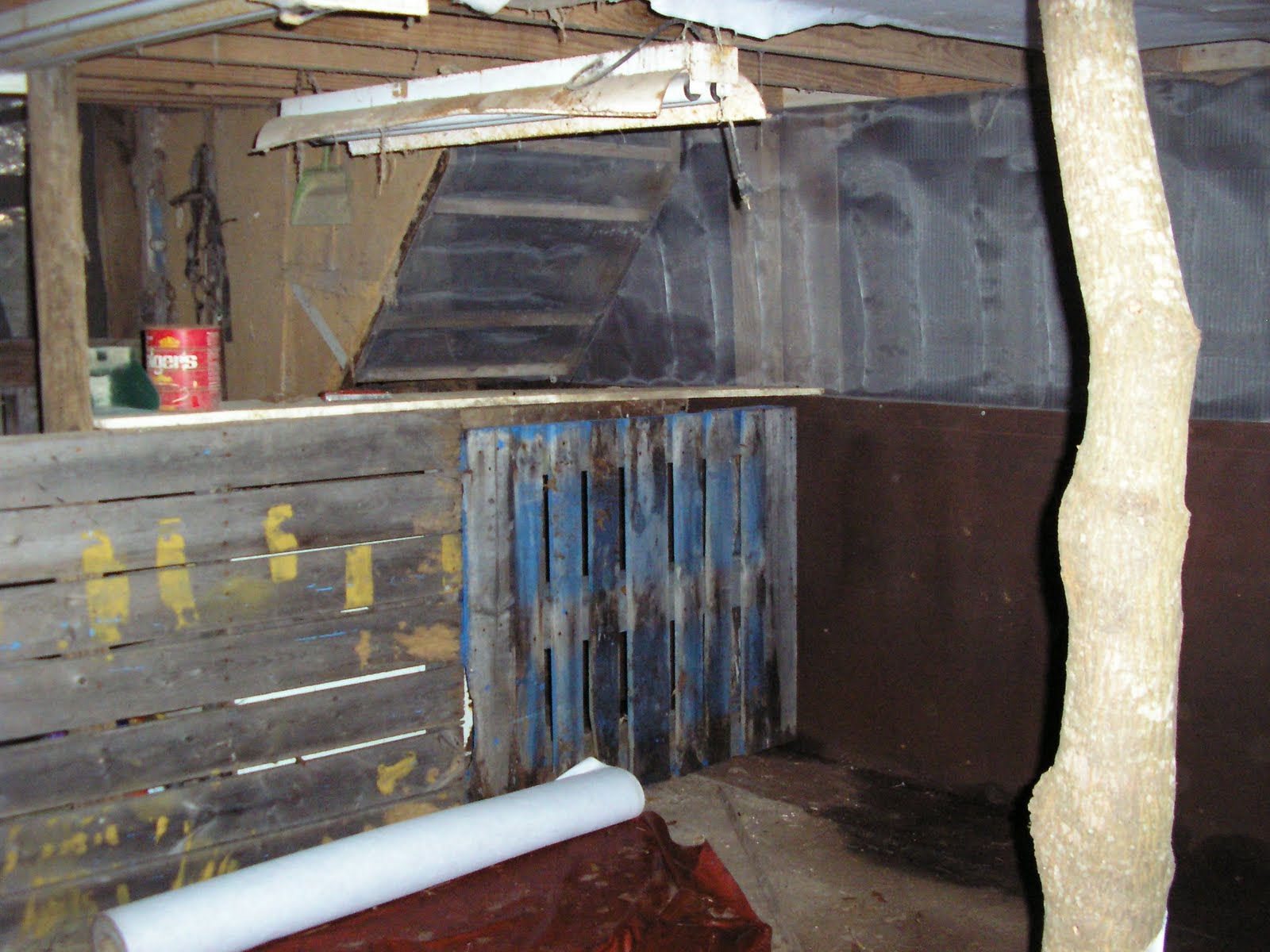
Here is the outside door that opens into the feed area. This is from inside the colony.

I had another picture of the outside of the door that opens into the feed area. We still need to put up the gate into the colony itself and trim some of the conveyor belt and put up a few new pieces. So a little more work and we will be done. Again I am so excited to get these rabbits out of their cages. Blessings, Kat
Saturday, January 7, 2012
12 Months, 12 Goals
We tend to do a lot of thinking during the winter about what we can do that we haven't done and what didn't work and can be re-done to work better and just general things that we would like to accomplish around the farm. We don't always accomplish all that we would like to do each year. Some things take more time to do, some things are a little more costly and must hold off, and some things we just don't get around to. That is farm life. This year we have 12 goals...one for each month. We'll see how we do by the end of the year. So here they are:
1. Build the rabbit colony
2. Raise the garden fence to keep chickens from going over.
3. Build shelter for next year's pigs
4. Move and organize the tool shop
5. Build a smokehouse
6. Cross fence the large pasture
7. Re-fence the property fence along the back of the property
8. Re-fence one section of what was the pig pasture
9.Clean up dead trees in the front pasture
10. Re-roof the old shed and turn it into a processing area
11. Paint the studio
12. Get a new gate for the big pasture
Well, those are our goals anyway. We will just have to see what we can accomplish. What are your goals for the year? Blessings, Kat
1. Build the rabbit colony
2. Raise the garden fence to keep chickens from going over.
3. Build shelter for next year's pigs
4. Move and organize the tool shop
5. Build a smokehouse
6. Cross fence the large pasture
7. Re-fence the property fence along the back of the property
8. Re-fence one section of what was the pig pasture
9.Clean up dead trees in the front pasture
10. Re-roof the old shed and turn it into a processing area
11. Paint the studio
12. Get a new gate for the big pasture
Well, those are our goals anyway. We will just have to see what we can accomplish. What are your goals for the year? Blessings, Kat
Rabbit Colony 2
Well the first step in setting up the colony was to clean the space out. We burned off as much of the trash and debris as we could, but as you can see there was a good sized pile of stuff that will have to be hauled off.

Here is the small pile of potentially usable lumber than we got. It is mostly small pieces left from other projects so we will probably use it to build stuff for the rabbits.

Here is the small pile of stuff that might still be in usable shape. I will sort through this pile in a couple days and discard anything beyond repair. We did find some heavy duty pullies, a fence stretcher and a come along. Hope they are still in working shape once they are cleaned up. Sure would be nice to have.

This is the space all cleaned out of junk and the old nasty particle board off the walls. Sure did let in some light taking that stuff down. The space is about 14 ft. wide and 16 feet long. It will be a good sized space to set-up two colonies, a feed space and a couple cages for emergency purposes. The large hutch type cages that we are using now will make nice grow out cages for the weanlings.

Next step in a few days. Blessings, Kat

Here is the small pile of potentially usable lumber than we got. It is mostly small pieces left from other projects so we will probably use it to build stuff for the rabbits.

Here is the small pile of stuff that might still be in usable shape. I will sort through this pile in a couple days and discard anything beyond repair. We did find some heavy duty pullies, a fence stretcher and a come along. Hope they are still in working shape once they are cleaned up. Sure would be nice to have.

This is the space all cleaned out of junk and the old nasty particle board off the walls. Sure did let in some light taking that stuff down. The space is about 14 ft. wide and 16 feet long. It will be a good sized space to set-up two colonies, a feed space and a couple cages for emergency purposes. The large hutch type cages that we are using now will make nice grow out cages for the weanlings.

Next step in a few days. Blessings, Kat
Friday, January 6, 2012
Rabbit Colony
Well, we have made the decision to move our rabbits into a colony or colonies type setting. We won't have an outside colony, but have decided to use the old feed room in the big horse barn. We have made this decision for several reasons. I have several rabbits that refuse to use a litter box and so their cages must be cleaned since they are wood bottomed regularly. All my cages are full and I either need to build or buy more cages which I have no where to put in the area that the rabbits currently are. The rabbits are not necessarily cooperating on cage breeding lately. So our first step was to clean out the old feed room which had been used as a storage area by the previous owner. Particle board had been put up on the walls, which was falling down and most of the stuff she had in there was rotten and destroyed by mice. We even found what we think was a possum skeleton behind a wooden box. We have spent years getting rid of the junk left on this farm by the previous owner. She never threw anything away and each of the pastures had a large mountain of scrap metal where she just dumped old tools, wire, roofing material etc. She kept saying she was coming to get stuff from the buildings so we were careful to keep it there. However, we need the space and there is so little left in that room that is useable or even recognizable. One large wooden crate had obviously been filled with stuff made of wood which had rotted into one large pile of sawdust. Of course the stuff had been in there since the 70s and there had been leaks in the roof for quite some time when we moved here, but what a mess. So we cleaned all that out yesterday and burned what we could and now have a couple loads to take to the dump and one very small pile of stuff that might be usable. Now we have a clean slate. Today I will measure the area and plan the layout for the colonies along with taking the junk to the dump. I will take some photos along the way to show our progress and how everything is set-up and built. There is so little on the net about indoor rabbit colonies that I thought a pictorial of the progress would really help others thinking about doing the same thing. The cages will be kept as grow-out cages for weaned litters and this way our colonies won't get too crowded and it will be easier to catch the rabbits for butchering. For the posts on our progression I will keep the same title just adding numbers behind it for ease of following. Blessings, Kat
Sunday, October 23, 2011
Fall To Do List Has Begun
Well, it certainly appears that fall is finally making its appearance around here. We went from 80 degree days and 60 degree nights straight to 60 degree days and 40 degree nights. Needless to say it has been a little chilly and we even cranked up the woodstove in the evenings and early mornings to take the chill off the house. As many of you might remember this old farmhouse is VERY leaky. As many leaks as we have fixed over the years there are at least twice as many more. Anyway before I digress any further it is that time of year to get those fall chores done so that we are not out in the bitter cold and rain of winter trying to do what needs to be done. The less time I spend outside when it is 20 degrees the better. I always seem to never get everything done and wind up running around in the cold anyway at the last minute when there is a winter storm just about to blast through. I want this year to be different, let's see if I can accomplish that. So here is a rundown of the fall chore list to be done and what has already been completed.
1. Start the deep bedding in the goat barn and close off the northside of the breezeway. Done!
2. Start the deep bedding in the rabbit cages and secure them against the winter winds. Done!
3. Move pigs from the pasture to the finishing pen for their last month and a half. Done!
4. Finish splitting and stacking firewood. Working on it....
5. Fall/winter garden planted. Done!
6. Add compost and mulch to spring garden beds and put up trellises for spring peas (actually planted in late January for us).
7. Finish adding compost to pile and top it with a healthy layer of fall leaves to let sit over the winter.
8. Clean and re-bed chicken coop.
9. Cover the north and west sides of the chicken coop to keep cold winter winds from blowing through. Done!
10. Finish the stalls in the big barn so that all of the horses have shelter this winter at night.
11. Put the window coverings up in the house.
12. Put the electric blankets on the beds. Done
13.Cover the screens of the side porch.
14. Close up crawl space and basement vents. Done!
15. Wrap all exposed pipes for outside faucets.
16. Disconnect unused hoses and put away.
17. Put away, clean and oil all garden tools not in use.
18. Rake up all pine straw and leaves into beds or compost pile.
19. Burn off trash piles.
20. Clean up front and back yard.
21 Check fences for repairs.
22. Straighten up and tidy tool shed.
23. Bed the horse barn.
24. Finish getting in hay.
25. Put away summer clothes
Well, that about takes care of it. If we accomplish all of this then winter chores will run much smoother and that will mean less time out in the bitter cold winter wind and rain. I will keep you all updated on how the chore list comes along. Blessings from the farm!
1. Start the deep bedding in the goat barn and close off the northside of the breezeway. Done!
2. Start the deep bedding in the rabbit cages and secure them against the winter winds. Done!
3. Move pigs from the pasture to the finishing pen for their last month and a half. Done!
4. Finish splitting and stacking firewood. Working on it....
5. Fall/winter garden planted. Done!
6. Add compost and mulch to spring garden beds and put up trellises for spring peas (actually planted in late January for us).
7. Finish adding compost to pile and top it with a healthy layer of fall leaves to let sit over the winter.
8. Clean and re-bed chicken coop.
9. Cover the north and west sides of the chicken coop to keep cold winter winds from blowing through. Done!
10. Finish the stalls in the big barn so that all of the horses have shelter this winter at night.
11. Put the window coverings up in the house.
12. Put the electric blankets on the beds. Done
13.Cover the screens of the side porch.
14. Close up crawl space and basement vents. Done!
15. Wrap all exposed pipes for outside faucets.
16. Disconnect unused hoses and put away.
17. Put away, clean and oil all garden tools not in use.
18. Rake up all pine straw and leaves into beds or compost pile.
19. Burn off trash piles.
20. Clean up front and back yard.
21 Check fences for repairs.
22. Straighten up and tidy tool shed.
23. Bed the horse barn.
24. Finish getting in hay.
25. Put away summer clothes
Well, that about takes care of it. If we accomplish all of this then winter chores will run much smoother and that will mean less time out in the bitter cold winter wind and rain. I will keep you all updated on how the chore list comes along. Blessings from the farm!
Tuesday, December 28, 2010
Time for Planning
Well, it is that time of year again....time to plan the coming year. I always take the last week of December to sit down and think about where I want to go with the farm in the coming year. As far as livestock goes, I want to increase my chicken flock considerably so that I have enough eggs to sell and a few extra roos to butcher. I have some decent size birds (Black Australorps, Brahmas, New Hampshires) and with these could get a meal out of one. I also want to increase my rabbit population as I believe I am in a good area to sell some extra rabbits for either raw feeding to pets or for people to eat themselves. So I will build a few more hutches so that I have space to save a few rabbits from the litters due soon. The biggest planning this year is going into the garden. It does require me taking a good look at my food stores to see what I might have lots of (jams, jellies, pickles, preserves, sauces) and what I need more of. I have added organic matter and tilled it in for several years now, so the garden soil has a really good tilth. This year I don't plan to till anything and instead will simply be applying a good several inches on top. This is sort of like lasagna gardening, just not as much as you would starting a lasagna garden from scratch. This is a good way to use feed bags also. My compost pile for the garden is well cooked and ready to use so I don't want to put anything else in it right now since it won't have time to cook before I need it. So I will place down feed bags then layer compost, then leaves, then compost. That will sit like so until I start planting next month (yes next month). Then when the compost pile is emptied, I can start back to putting stuff in there so that it will be cooked by the end of the year. I also like to take a look at my notes from last year to see where I might have had problems and try to figure out how not to have those issues this year. A big problem last year was critters....namely chickens. That issue has mostly been solved by the chicken wire along the bottom of the fences surrounding the gardens. Another issue was the goats jumping the garden fence, so I think we will be running hot wire around the outside perimeter and that will solve that issue. Dakota, our great pyrenees is now taking control of the squirrel population. She kills about 1 a week so (my husband is so jealous)they should be less of an issue about getting my tomatoes. I love having the ducks in the garden, but they love anything small and green. So I am thinking of building some short wattle fences to keep them out of the bed areas until the plants are well established. I can't tell you how many little seedling were yanked out of the ground because of the ducks. I do want to add some more ducks, especially females so that we have a breeding population. Wattle fences are very light and can be made so that they can be moved quite easily and set up somewhere else. They are also cheap in that you use small saplings that you want to get rid of anyway. And I think they are rather pretty. We have 2 sides of both pig areas set up. We have a large area that we need the ground worked on the far side of the garden and we will start the pigs there. From there it will be relatively simple to move them to the front pasture where they will spend the majority of the summer grazing and then from the front pasture they will be finished off in another large pen where we need the ground worked and has several large nut trees that they can forage on. From that last pen they will head to the butcher. The pigs will go to a professional butcher because I am still getting the hang of cutting meat up. I want to get the most of my pigs, so it is better left to the professional. I certainly wish I could find an on farm butcher in my area, but there just doesn't seem to be anyone. We plan to have the first pen finished by March and then we will head out to get our little piglets. I am not really interested in raising pigs full time just yet. I really have my plate full at the moment with trying to build what we have going already. However, there is a nice farmer in the next town over that raises pigs and sells the weaners at a good price. Both pigs will provide enough pork for our family, my mom and my aunt. Then of course, there will be all the great lard that I will have for making soap and cooking. We are going to add a brooding area to the chicken coop and will be starting to incubate eggs in February. When the little chicks are ready to go outside the weather will be warm and they will have a safe area away from the bigger chickens. We might put one of our Brahma hens in with them as she will adopt anything to mother. I am hoping that she will sit and raise a clutch for us this year. But if she doesn't then we will give her a clutch to raise. I will be checking my seeds today to see what I need to order. I know we plan to grow extras for livestock feed and work on improving our self-sustainability as far as livestock feed goes. I will plant more beets, especially mangles, so that we have more to get us through the winter next year. So as you can see lots of planning and decisions being made. We are hoping for a good productive year. Happy planning, Kat
Sunday, November 7, 2010
Looking Back at the Year
I found my post from the beginning of the year in which I listed the things that I would like to get accomplished for this year. It is interesting to look back on such a busy fly by year and realize how much or how little we accomplished of our year's aspirations. However, when looking back we must remember that life has its own agenda and doesn't always go exactly as planned. So I thought it would be fun to take a look at what I wanted to get done vs. what actually was accomplished. So here is the list and those things that have been done or are in progress have been italicized in bold print.
Grow in my relationship with Jesus Christ, work to come closer to Him and what He wants for me. I work on this daily as it is the first thing that I do in the mornings.
Have more patience with my husband While I have worked on this throughout the year, I do think that as of late I have been failing a bit.
Plant a new orchard
increase the size of the garden, grow some new varieties of tomatoes, and more sunflowers We did do this to some extent with the exception of the sunflowers. Our "new tomatoes this year were Purple Cherokee and Borgo Cellano. The cherokee did not do very well, but the cellanos were great.
Spend more time sewing I truly and working on this and it has been made much easier since dictating Fridays to be sewing day.
At least build the outdoor oven, would like to have the whole summer kitchen but....
Raise ducks and turkeys for the freezer We made an attempt at this with the ducks. Our females died and left us with just the boys. Will look to add more in the spring.
Incubate more eggs to increase the size of the flock
Keep only one spring doeling! Butcher all bucklings and sell extra doelings We definitely did this as it was a banner year for boys here and only one spring doeling born.
Get one to two inches of compost spread in the goat pasture, garden, and orchard pasture Done
Increase the compost piles (both size and number) Done
Get firewood cut and stacked earlier in the year
Make time for target practice Done
spend more time with the horses
have more family game nights Each week we have a family game night, usually Thursday night when hubby is home for the evening.
rebuild the solar shower (outdoor summer shower)
plant a berry patch
thin out the pine thicket
get rid of excess clutter I am working and progressing in this area.
So all in all it hasn't been too bad of a year. I have accomplished many of the goals or at least made an attempt at it. The year of course is not over, but obviously some things will have to simply wait. Patience is really what this life is all about. Things get done and added in due time and we must have patience to wait for that time when it is right. Well, time to hit the barn. Blessings from the farm, Kat
Grow in my relationship with Jesus Christ, work to come closer to Him and what He wants for me. I work on this daily as it is the first thing that I do in the mornings.
Have more patience with my husband While I have worked on this throughout the year, I do think that as of late I have been failing a bit.
Plant a new orchard
increase the size of the garden, grow some new varieties of tomatoes, and more sunflowers We did do this to some extent with the exception of the sunflowers. Our "new tomatoes this year were Purple Cherokee and Borgo Cellano. The cherokee did not do very well, but the cellanos were great.
Spend more time sewing I truly and working on this and it has been made much easier since dictating Fridays to be sewing day.
At least build the outdoor oven, would like to have the whole summer kitchen but....
Raise ducks and turkeys for the freezer We made an attempt at this with the ducks. Our females died and left us with just the boys. Will look to add more in the spring.
Incubate more eggs to increase the size of the flock
Keep only one spring doeling! Butcher all bucklings and sell extra doelings We definitely did this as it was a banner year for boys here and only one spring doeling born.
Get one to two inches of compost spread in the goat pasture, garden, and orchard pasture Done
Increase the compost piles (both size and number) Done
Get firewood cut and stacked earlier in the year
Make time for target practice Done
spend more time with the horses
have more family game nights Each week we have a family game night, usually Thursday night when hubby is home for the evening.
rebuild the solar shower (outdoor summer shower)
plant a berry patch
thin out the pine thicket
get rid of excess clutter I am working and progressing in this area.
So all in all it hasn't been too bad of a year. I have accomplished many of the goals or at least made an attempt at it. The year of course is not over, but obviously some things will have to simply wait. Patience is really what this life is all about. Things get done and added in due time and we must have patience to wait for that time when it is right. Well, time to hit the barn. Blessings from the farm, Kat
Friday, April 2, 2010
Spring Cleaning...Farm Style
Folks in town really don't know what spring cleaning is. They clean out closets and drawers, yes. They might even have a garage that needs some clutter removal and tidying up. However, there is nothing like spring cleaning around a farm. It seems like winter no matter how harsh or mild really takes on toll on the tidy, clean and neat appearance of a little farm. Repairs that were quickly made with frozen hands result in tools left where they lay. The huge pile of wood chips in front of the house where the wood was split in need of going into the compost pile or rose garden. The tree limbs laying everywhere from the winter winds. The stuff that you thought possibly still had some use is still sitting in front of the tool shed waiting for your imagination to find some purpose for it. The screened porch that caught everything from everywhere needs to be sorted, emptied, cleaned and tidied. The barns, pens, and sheds all need to be cleaned of their winter deep bedding. Yes, spring cleaning on the farm is a huge and daunting chore. So that is what things look like around here. Kidding season will begin for us in 15 days, give or take a day or two. So we have been cleaning and organizing and de-cluttering so that the farm is once again a tidy little oasis in this vast world of ours instead of the junkyard it gets to looking like over the winter. Today, thunder will be in charge of mowing the yard. The goats will be given the duty of weed eating. They are much more efficient at this job than any gas powered tool sold by the big box stores. My husband is on limb and yard trash duty. All of that will be burned and then the potash spread in the garden and pastures to add phosphorus to our soil which is lacking. We have cleaned out the chicken coop and the horse barn, leading to a great start on a new compost pile that will grow tremendously. The rabbit cages have been thoroughly scrubbed and now the goat barn is getting a good cleaning out. We have a lot of painting to do this spring and most of that duty will go to the children since it is outside painting. The repairs on the roof of the tool shed are still on the list to be done as last year flew by and it kept getting put off. Spring is definitely here and so the work load has tripled. So much for the relaxing days of winter! Hope your spring is just as blissful as ours!
Thursday, December 31, 2009
How much to feed the livestock?
I have posted before that I try to grow as much feed or learn to forage for as much feed for my livestock as possible. So knowing how much to grow and what to grow can be important for the self-sufficient homesteader. I know that there are calculation methods out there and probably most of the agricultural schools have guides on how much of what yields what per acre. I have taken a much less scientific approach I guess to my learning to grow for my animals. The bunnies are relatively easy in that there is either something growing that they can eat or something that can be foraged. In our area there is always green stuff growing. The simple thing for them is knowing what is growing when and what they can eat. The chickens are also pretty easy because like I said there is always something green and much of it they will eat also as they free range during the day. I also supplement with mangle beets, a small amount of grain and whatever kitchen scraps and such that I have. This year I grew sunflowers and corn for the chickens in the winter. The chicken patch of corn was relatively small about 20 ft. x 30 ft. however, we don't feed them much corn, about 2 to 3 cobs a week. They have more than enough to forage for and kitchen scraps. They are also the cleaner uppers when the horses or goats spill some of their feed. Each year I plant a bigger patch of whatever and see what it yields. I don't think I will plant a bigger patch of corn for the chickens. We have more than enough from the patch that I planted to get through the rest of winter. The mangle beets last quite a while as they are quite large. I have 3 hens that peck a little each day before they go outside and their beet lasts them about a week. I planted 4 30 foot long rows and that is plenty for the chickens. The bunnies get the beet greens and so they are dual purpose animal feed. I will plant more though because I will try using them to supplement the horse feed next year. Mangle beets are easy to store, just throw them in a corner of the feed room or leave them in the ground and pull when needed. In barns in Europe then simply pile them up in the aisleway and use as needed. They keep very well in the cold. Storing corn can be an issue and feed corn is taking up a good portion of my freezer space. I simply am not comfortable with trying to dry it, especially with the wet year we have had. Mycotoxins from improperly dried corn can kill your livestock so I simply froze the corn and pull from the freezer as I need to. I have a plot of oats planted for spring harvest that is about a quarter acre in size. I am not sure how much I will get from that plot but it will give me an idea of how much I need to get the amount of feed that I need. Oats can be grown in two seasons around here, plant in the fall for spring and plant in the spring for fall. My goal with growing feed is learning what feedstuffs yield the most on the smallest amount of land. I grew millet and it grows very well and yields a good amount of grain on a small acreage. Same thing for black oil sunflowers. Each 10x20 plot yielded about 25 pounds of seed. Certainly not enough to get through the whole year, but by planting more I can get through the summer when sunflower seed is the most costly. Homestead is all about planning and looking to the next season. Wheat is cheap in the fall and winter so it makes a good grain to add to the mix and easy to stock up on then. So it is beneficial for me to plant spring wheat to be harvested and used in the summer until the fall wheat starts coming in. The key in knowing how much to plant is to know how much you use. I know when I was buying pre-made horse feed I went through about 800 lbs a month. I started mixing my own feed (oats, wheat, black oil sunflower seeds, cracked corn, alfalfa pellets) and my horses are healthier on 400 lbs. of feed a month. I also look at things like pasture maintenance as part of my feed program. The longer I can keep forage growing then the less grain I have to grow or purchase. One thing that I have found is there simply is no exact set amount of feed for each species or even each animal. I guess that is one of the things that I love about homesteading/farming. You wear many hats and one of those hats happens to be animal nutritionist. Usually, in determining what I am going to grow and how much I am going to grow for my livestock I use several things. When do I need it the most (winter), what grows easily (mangle beets), is there something I can use for more than one animal, and how much room does it take to grow a decent amount. hay I will never grow as it takes too much room and is too labor intensive. I will harvest and have harvested hay from my mother's place with a lawnmower and a rake. It means that I don't have to dip into my winter hay stores for an extra month or two. But growing enough for 6 months of hay needs is simply not feasible on my 10 acres. However, I could plant a half acre of sunflower seeds and get enough of those to get through to the next year. That is worth my time. Small grains yield more per acre than large grains or grasses. Corn needs more room than oats. I would like to be totally self sufficient in my feed needs, but as long as I have horses I am not sure that will happen. There need is greater than my capacity. However, we are working on this and each year we learn a little more. I will try to come up with some better numbers for a future posts, but this should get you folks started. God bless.
Garden Planning
Yes, I know it is midwinter. However, this is the best time of year to plan your attack on the garden in the spring. For us in the south spring comes early and we will be sowing peas, carrots and other cool weather crops sooner than we think. So, it is time to plan. Each year I keep a notebook of garden happenings for the year. I make notes about certain crops and drawings of where things were grown. The drawings allow me to rotate things around to conserve soil nutrition. The notes give me ideas of how to improve, things that didn't work so well, plants or varieties worth growing and those not worth growing. So I sit down every January and take stock of what the next year's plan will look like (or hopefully look like). I start a new notebook (just a small spiral notebook) and start with what I plan to grow. Once I have that then I check my seed supplies to see if I need to order anything. This year I am completely out of broccoli and cauliflower seeds so I will definitely be ordering those. Then I look through my seed suppliers catalogs and decide if there is anything I want to try. If I am adding something new (like this year expanding the herb garden), then I add those things as well. I then take a look at the previous year's garden drawings and make a new drawing rotating plantings around the garden so that I am not growing in the same spot I did the previous year. Because my garden goes around a pond then I pretty much have to grow in blocks instead of one big plot with everything all neat in a row. I have blocks with everything all neat (well, I try anyway) in a row. I highly suggest everyone have some sort of plan for their garden. It definitely saves time on the garden, and it also saves money on the garden as well. I remember when I didn't plan and I would spend money on seeds that I did not need simply because I forgot that I harvested seeds the year before and had tons of them. Or I would replant something that had not done well the year before and waste time, energy and money trying to grow something that simply did not do well for me. Our garden is designed to not only provide us with good wholesome food, but save us money also. It is important that I keep that focus in mind when the gardening addiction hits full force in spring. Hope your planning goes well and we all have a bountiful harvest. God bless.
Wednesday, November 25, 2009
God's Order and the Seasons
God has placed an order and timing into everything. That order can be seen in the seasons as well. God commanded that we rest on the 7th day and the 7th year. But what about all those days, weeks, months and years in between? Don't we get a break sometime? Why yes, Virginia, we most certainly do. Let's take a look at nature and God's seasons to find that break from our toiling and our labor. Now remember I also look at everything from an agricultural standpoint because well....that is our life. In the Spring it is time to plant and reawaken the earth from it's winter slumber. Spring is full of planting and cleaning up from the winter winds. Spring is also a time of birth on the farm seeing the birth of calves, lambs, kids and what have you. So spring is a busy season in the expectation of the fall harvest. It is a time for cleaning up and making new again what once looked so desolate and dead. Then we move into summer which is a time of maintenance on our farm at least. Maintain the garden, repair buildings, maintain fences and pastures. It is also a time to begin to think about winter once again as we cut trees to be used for firewood. So with spring and summer time is busy and we bustle about as the harvest begins to roll in with late summer and we begin to think of winter coming once again. Like the ant our days are not spent lazing about, but in hard labor and preparation for the season that is to come. As we move into fall our labor picks up pace with the cooler weather, the harvest full on, and the threat of a bitter winter wind looming in our minds. There is usually much to be done on a farm in the fall. Projects to be finished and put away, feed and bedding for the animals to be put away and things to be done to make sure that they survive the coming winter cold in some comfort. Our livestock is the backbone of their lives and their needs are met before ours. It is a vast responsibility that a stockman carries on his shoulders. The animals give their lives into our hands completely much in the same way that we give our lives to God's hands completely. Their needs come before ours and we must see to their needs, their care, and their well being in much the same way that God Almighty sees to ours. Notice, I said "needs", for there is a vast difference between needs and wants. I am sure that my goats would love me forever if I gave them unlimited access to their grain barrel, however their needs are truly much smaller and healthier for them. So in fall we are busy seeing that our animals needs will be met when nature closes her buffet line and old man winter is whistling across the fields and into the barn. The animals have food to last the winter and warm bedding to snuggle down into. Then winter rolls in with a cold biting wind and guess what, it is our season of rest. It is a time to hunker down and wait for the first signs of spring. Winter is our 7th day and 7th year rolled into each full year so that we can rest our weary bodies and our minds from the labors of the year. There is a song that we sing with our children and the first line of the song is "Be still and know that I am God". Well, winter is our time to be still and know that He is God and He is Glorious. There is nothing that we can accomplish without His hand being on it, in it and around it. As I reach into the cupboard to get that can of apples that I so lovingly put up, it has His hand stamped all over it for without God's grace that apple tree would not have grown. We can do nothing without Him. it is by His grace that He has given us creatures to provide our needs for nutrition, clothing, transportation and companionship. So this winter, I plan to "Be still" for a bit and get to know my Lord and Saviour a bit more. It will be a time to wonder at the Glory of it all and a time for thanksgiving that He has given us all that He has given so freely. The time is coming for a break from our labors (a much needed one I must say), a time for quiet activities and time to be still and know our God. God bless!
Tuesday, November 24, 2009
Taking Care of Your Tools
Well, it is that time of year. The last of the harvest has been picked and the big garden is done for the year. Now, is the fun time...putting away all those tools until next season. So let's talk about those gardening tools. I use a lot of hand tools for several reasons, 1) they don't cost anything to run, 2) they can in places that other tools would be awkward, and 3)I get lots of great exercise using them. I buy good quality tools from places that sell good quality tools. I used to buy those cheap 10.00 hoes and shovels at the big box stores, only to have them break, bend and generally fall apart before the garden season was over. Now, I come off some money and buy tools that will last. For this very reason I find it just as important in caring for your tools before you put them away for the season. So, gather up all your gardening stuff and get out there and let's get it clean. First you need to take a good stiff brush and some water. Scrub, scrub, scrub away all dirt and junk that has accumulated over the gardening season. Then dry your tool making sure that there is no water in all the little nooks and crannies which would cause rust to build up over the winter. I usually take an old towel, dry the tool as best I can and then set it upside down against the garden fence to make sure there is no water stuck right around the handle connection. After I make sure the tool is well dried, then I oil the tool. This is about the only thing that I use vegetable oil for and I have found that it works well. I take a rag and simply rub the oil all over the metal part of the tool. If the tool has a wooden handle then I make sure and oil that also because it will keep the wood from becoming too dry and brittle and make wooden handles last longer. Then I hang my pretty, shiney, and clean tools up in the tool shed until next spring. So, the moral of the story is to buy good quality tools to start with and then take care of them each season. Happy Cleaning!
Wednesday, November 4, 2009
How we keep our Rabbits
I started out keeping our rabbits in wire cages. They were a pain to clean because fur and poo would get stuck in the joints and was hard to scrub. I also got super filthy trying to scrub all that wire. It wasn't too bad when we had them in the old chicken coop that we thought would make a good rabbitry. We found out that it was too small and the mosquitoes really loved that shady spot. Also because of the tree beside the door, it was hard to get the wheelbarrow in to clean out the droppings below the cages, which attracted a multitude of insects. We decided to move the rabbits to the center aisle of the goat barn. In the summer they will get great ventilation and there are fewer bugs. We also have electricity in the goat barn for a fan in the summer time. The issue was the droppings from the wire cages as two of our goats like to rest beneath the cages. Not the healthiest environment and we certainly did not want babies playing under there. We also needed more cages and were wondering where to hang them all. Well, I came across a video from the French Angora industry and how they cared for their rabbits. They used kennels with solid bottoms. Each day they add more hay/straw and the rabbits use what they don't eat for bedding. This method of course costs more than just letting the waste drop through the cage floors. I liked the idea though and we built kennel type cages. They have a solid floor and a solid roof. Three sides of the kennels are wire for summer ventilation and in the winter we have a heavy rubber tarp that covers the wire sides and back of the kennels to preserve body heat and warmth. We are using the deep bedding method and have had wonderful results. This is how we are handling this. When we set up the cage we put down about a 1 inch layer of Dry-Stall (a natural absorbant clay product that we use in the horse stalls to absorb urine and keep the stall floors dry. Then we added another 2 inches of straw. Each day we give the bunnies a generous portion of hay and they eat what they want and spread out the rest. Their activity causes the droppings to fall into the bottom layer of the straw. They tend to use one corner as their bathroom area so we make sure that a layer of straw or hay gets into that corner to keep absorbing moisture. Each day we checked for too strong a smell, dirty bunny feet or any other problems with not changing the bedding daily. We planned to keep the deep bedding system going for a month. It is a success. The bunnies are happy and healthy, there is less smell than there was with the old rabbitry, and fewer insects as well. When we cleaned out all the bedding at the end of October there was very little moisture on the wood floor as the dry stall and straw/hay had absorbed all that was in the potty corner. Our rabbits seem much happier as they jump and leap and zoom around their new digs. They can see more too which I think they like. They stayed clean the whole month. October was a pretty warm month for us so it will give us an idea of what we might expect next summer. The cages were much easier to clean as everything was swept out into the wheelbarrow to head to the compost, and then a mild bleach solution used to scrub out the entire floor of the cage. It was then allowed to air dry and then new bedding added. Summer might present some issues and we will just have to adjust as summer gets here. Cages may have to be cleaned more often in the summer. One of my concerns was that if the bunnies got to warm the straw would present an issue. However, this does not seem to be the case as our buck demonstrated. He simply pushed all of the straw away from one of the sides and plopped his big self right down on the cooler wood floor on a couple of really warm days this past month. My big issue is being as efficient time wise as I can around the farm, this definitely helps in that goal. Of course, we are still in the experimental stage because we have not had to go through an entire year of seasons doing this, so we will see by the end of next summer whether this will work or not. Right now, it is a great way to keep rabbits even if a little more expensive. God bless.
Friday, September 25, 2009
Fall on the Homestead
This past year I started posting about projects and chores that we do around here that are seasonal. Homesteads usually run with the seasons and certain things seem easier at certain times of the year. So now, it is time for fall chores even though it still feels like summer outside. Here is the fall chore list for Whisper Wind along with what has been accomplished so far.
1. Split and stack the wood that was cut this summer. We really lucked out this year. Even though we had plenty of wood for this winter to cut because of a very large oak tree that had come down in a storm last year and we were still cutting from it, some friends down the road decided to remove a few smaller oaks from their yard. We took our chainsaw down there and help cut them down, cut them up, and burn off the smaller limbs. In exchange for doing this all that wood came home with us as they don't use their fireplace. We have wood now for 2 winters, but it still needs to be split and stacked.
2. The fall garden is in. It took me two weeks to get in the fall garden, but most things are looking pretty good and we will at least get a decent squash harvest (pumpkin, butternut, sphaghetti). So right now it is just a matter of maintaining the garden and fighting the grasshoppers and caterpillars.
3. Gather projects and materials for the winter and those "oh too cold and rainy days". Still working on this, sewing projects and materials are all done. Craft projects are in the works.
4. Check and repair the fence lines and remove any dead wood that could cause a problem. Fence lines are done and wood is currently being done.
5. Get in winter feed. With the rain the past couple of weeks we have not been able to get hay in other than what has already been put up to feed the bunnies. We will get in enough for the goats and horses soon. We don't have to put up much because of the nextitem on the list.
6. Overseed pastures for the winter and fertilize. This has been done.
7. Make any barn repairs and make sure they are wind proof for the animals.
8. Build 3 passive solar heaters to offset heating costs. We have gathered most of the materials and now just need to get them put together.
9. Get the horse blankets ready and make any repairs that need to be done. This has been finished and even my stallion's blanket was in pretty good shape. He is really hard on blankets and usually goes through them pretty regularly.
10. Make sure all the insulation is still on outside water lines. This has been done.
11. Make sure all butchering knives are sharpened. This has been done.
12. Get out all winter bedding and wash. We still have a little more time before we need this.
13. Get the wheat planted. We are running a little behind on this. I had hoped to have this finished, but I don't.
14. Turn the compost pile and start fresh pile. Done
15. Re-bed the chicken coop and make any repairs that need to be made. Done and the old bedding started the new compost pile.
16. Gather and process acorns for the critters and the family. Working on it.
17. Gather pecans and get them put up. Working on it.
18. Build greenhouse enclosure for the front porch for winter growing and passive solar heat. Started gathering materials.
19. Build a chicken run to make things easier on me this winter. Working on it.
20. Check inventories and replace anything that needs replacing such as batteries, candles, charcoal, food supplies, etc.
21. Have maintenance done on all vehicles.
22. Do any caulking around house to keep out those chilly winter winds.
The two toughest and busiest seasons around here are fall and spring. The weather is nicest then and makes it much nicer working on large outdoor projects. Winters are cold and rainy and summers are hot and steamy. Nobody wants to spend much time outside during those conditions. However, around here with my husband being injured and my mother needing so much help, I haven't slowed down one notch since last winter. I am looking forward to a little rest and a few slower activities such as sewing. Right now I am just trying to get everything to where it will run most efficiently while it is cold outside. I keep thinking of the ant and the grasshopper and now I know how the ant is feeling! God bless and have a great day.
1. Split and stack the wood that was cut this summer. We really lucked out this year. Even though we had plenty of wood for this winter to cut because of a very large oak tree that had come down in a storm last year and we were still cutting from it, some friends down the road decided to remove a few smaller oaks from their yard. We took our chainsaw down there and help cut them down, cut them up, and burn off the smaller limbs. In exchange for doing this all that wood came home with us as they don't use their fireplace. We have wood now for 2 winters, but it still needs to be split and stacked.
2. The fall garden is in. It took me two weeks to get in the fall garden, but most things are looking pretty good and we will at least get a decent squash harvest (pumpkin, butternut, sphaghetti). So right now it is just a matter of maintaining the garden and fighting the grasshoppers and caterpillars.
3. Gather projects and materials for the winter and those "oh too cold and rainy days". Still working on this, sewing projects and materials are all done. Craft projects are in the works.
4. Check and repair the fence lines and remove any dead wood that could cause a problem. Fence lines are done and wood is currently being done.
5. Get in winter feed. With the rain the past couple of weeks we have not been able to get hay in other than what has already been put up to feed the bunnies. We will get in enough for the goats and horses soon. We don't have to put up much because of the nextitem on the list.
6. Overseed pastures for the winter and fertilize. This has been done.
7. Make any barn repairs and make sure they are wind proof for the animals.
8. Build 3 passive solar heaters to offset heating costs. We have gathered most of the materials and now just need to get them put together.
9. Get the horse blankets ready and make any repairs that need to be done. This has been finished and even my stallion's blanket was in pretty good shape. He is really hard on blankets and usually goes through them pretty regularly.
10. Make sure all the insulation is still on outside water lines. This has been done.
11. Make sure all butchering knives are sharpened. This has been done.
12. Get out all winter bedding and wash. We still have a little more time before we need this.
13. Get the wheat planted. We are running a little behind on this. I had hoped to have this finished, but I don't.
14. Turn the compost pile and start fresh pile. Done
15. Re-bed the chicken coop and make any repairs that need to be made. Done and the old bedding started the new compost pile.
16. Gather and process acorns for the critters and the family. Working on it.
17. Gather pecans and get them put up. Working on it.
18. Build greenhouse enclosure for the front porch for winter growing and passive solar heat. Started gathering materials.
19. Build a chicken run to make things easier on me this winter. Working on it.
20. Check inventories and replace anything that needs replacing such as batteries, candles, charcoal, food supplies, etc.
21. Have maintenance done on all vehicles.
22. Do any caulking around house to keep out those chilly winter winds.
The two toughest and busiest seasons around here are fall and spring. The weather is nicest then and makes it much nicer working on large outdoor projects. Winters are cold and rainy and summers are hot and steamy. Nobody wants to spend much time outside during those conditions. However, around here with my husband being injured and my mother needing so much help, I haven't slowed down one notch since last winter. I am looking forward to a little rest and a few slower activities such as sewing. Right now I am just trying to get everything to where it will run most efficiently while it is cold outside. I keep thinking of the ant and the grasshopper and now I know how the ant is feeling! God bless and have a great day.
Thursday, March 19, 2009
Homestead Economics
Sometimes new homesteaders forget about the economics of homesteading. In their excitement they rush out and buy material, buy livestock, and buy feed for the livestock. Then they pay someone to butcher that livestock. By the time all is said and done those cuts of meat in their freezer cost them more than those bought in the grocery. The economics of the homestead has been blown out of the water. What are homesteading economics? Well, reducing the cost of living, being self sufficient, being more sustainable, and for many environmentalism. So let's look at the economics of two homesteads from these perspectives. We will take raising a couple of pigs for fall butchering and look at it from two perspectives.
Homesteader 1:
1. Purchases 1 feeder pig in the spring for 30.00.
2. Purchases material for hog pen 200.00
3. Purchases feed for 6-8 months feeding 120.00-140.00
4. butchering cost in the fall 75.00
5. Supplement with kitchen scraps- Free
Total cost for about 150 lbs. of meat 425.00-445.00 or 2.83/lb-2.96/lb. Lately in the grocery store I have been paying less than 2.00 per pound for pork.
Homesteader 2:
1. Purchases two feeder pigs to breed later 60.00
2. Fences in small pasture for pigs to free range using purchased fence and cut your own fence post 200.00
3. Plants extra garden plot for hog feed (seed cost) 5.00
4. no butchering year 1
5. Supplement with kitchen scraps- Free
6. Year 2 8 piglets born- sell 4 (120.00 back into pig budget)
7. Again plant garden plot for hog feed using seeds from previous year's crop and allow free range- Free
8. Feed kitchen scraps- Free
9. Self butcher 4 remaining piglets- 600lbs. meat free
Total cost for 600.00 of meat 145.00 or 24cents/lb. Now that is a bargain
These scenarios are meant to be examples of how to plan and manage a homestead. A homestead is not meant to be cost consuming, but cost efficient. In order for it to be cost efficient means sometimes that proper planning should be thought out and done ahead of time. It also means that there may be more work involved such as growing your own feed. However, this is what the original concept of homesteading was a self- sufficient ecological environment. Having to re-purchase livestock each year and feed is not self- sufficient because you are still dependant on outside supplies. So when planning your homestead really think about how your homestead is going to support not only you, but the livestock that you have. Work towards making the homestead a closed ecological environment, meaning that it needs no outside sources for its support. God bless
Homesteader 1:
1. Purchases 1 feeder pig in the spring for 30.00.
2. Purchases material for hog pen 200.00
3. Purchases feed for 6-8 months feeding 120.00-140.00
4. butchering cost in the fall 75.00
5. Supplement with kitchen scraps- Free
Total cost for about 150 lbs. of meat 425.00-445.00 or 2.83/lb-2.96/lb. Lately in the grocery store I have been paying less than 2.00 per pound for pork.
Homesteader 2:
1. Purchases two feeder pigs to breed later 60.00
2. Fences in small pasture for pigs to free range using purchased fence and cut your own fence post 200.00
3. Plants extra garden plot for hog feed (seed cost) 5.00
4. no butchering year 1
5. Supplement with kitchen scraps- Free
6. Year 2 8 piglets born- sell 4 (120.00 back into pig budget)
7. Again plant garden plot for hog feed using seeds from previous year's crop and allow free range- Free
8. Feed kitchen scraps- Free
9. Self butcher 4 remaining piglets- 600lbs. meat free
Total cost for 600.00 of meat 145.00 or 24cents/lb. Now that is a bargain
These scenarios are meant to be examples of how to plan and manage a homestead. A homestead is not meant to be cost consuming, but cost efficient. In order for it to be cost efficient means sometimes that proper planning should be thought out and done ahead of time. It also means that there may be more work involved such as growing your own feed. However, this is what the original concept of homesteading was a self- sufficient ecological environment. Having to re-purchase livestock each year and feed is not self- sufficient because you are still dependant on outside supplies. So when planning your homestead really think about how your homestead is going to support not only you, but the livestock that you have. Work towards making the homestead a closed ecological environment, meaning that it needs no outside sources for its support. God bless
Subscribe to:
Posts (Atom)